When should a mobile groomer stop booking by text message and use real scheduling software?
Text booking works until it quietly stops working. Here are the signals that tell a mobile groomer it is time to move the calendar somewhere that can handle routes, deposits, and records.
Why texting works so well at first
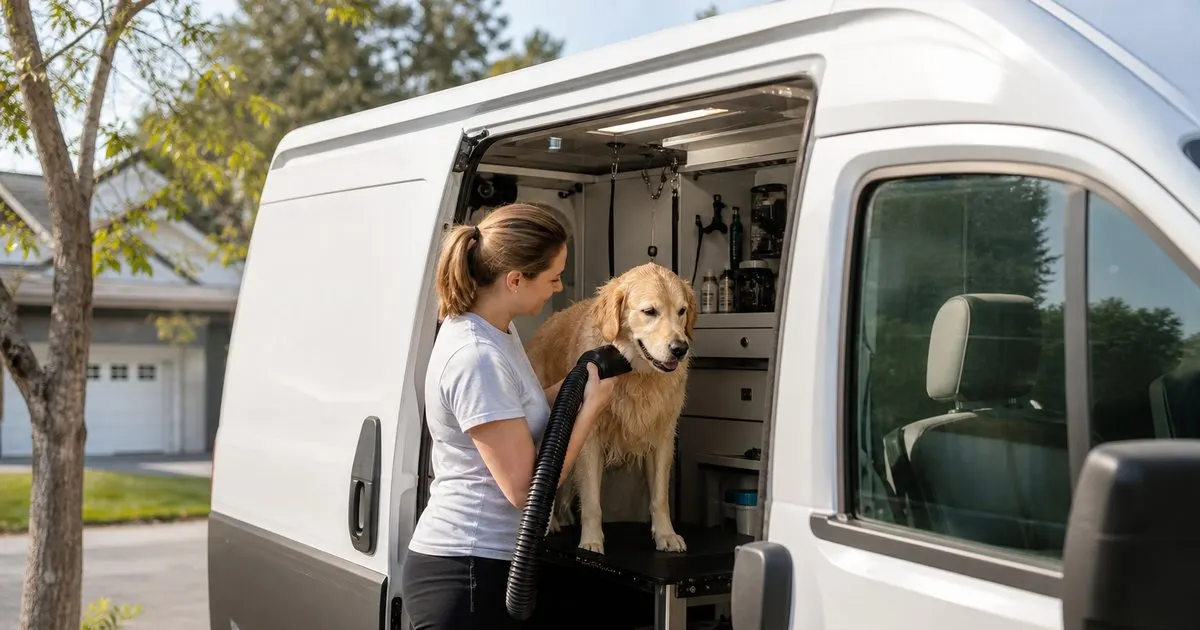
When you start a mobile route, texting is genuinely the best tool available. Clients already have your number, replies are instant, and you can send a photo of the finished dog in the same thread. There is no app to explain, no login to forget, and no monthly fee while you are still deciding whether the business will stick. Most mobile groomers we talk to ran on text for their first year or two, and that was the right call for them.
The trouble is that text booking scales with your attention, not with your client list. Every reschedule, every question about whether Thursday works, every lost address lives in a thread that only you can see. With a small book of regulars you can hold it all in your head. Somewhere past that, you start spending your evenings scrolling to figure out who confirmed and who did not, and that time comes straight out of your rest.
Keep reading: Why Online Booking Helps Grooming Businesses, Keeping Vaccination Records That Protect You, Reducing No Shows in Grooming. See how GroomBookr helps you grooming appointments plus a pet vaccination record vault.
The signals that it is time
The clearest signal is a double booking or a missed appointment that you cannot explain. If you have ever driven to a house and found nobody home because the reschedule got buried in a thread, or shown up for a dog that was already groomed last week, the text system has already failed once and will fail again. The second signal is when routing starts to hurt: you are crossing town twice in one day because the appointments were booked in the order the texts arrived rather than by neighborhood. Related: How much buffer time should you leave between grooming appointments for different breeds?
Other signals are quieter. You cannot answer a client's question about the last time you did a full shave-down without scrolling back months. A vaccine record was sent as a photo and you cannot find it. You wanted to charge a deposit for a new client after two no-shows but had no clean way to collect it. Each of these is a small inconvenience on its own, and each one is a task that scheduling software handles routinely.
What a mobile groomer actually needs from software
The needs of a van are different from the needs of a storefront. You want a calendar that can show appointments by location so you can cluster a day into one area, and a booking page that asks for the service address and gate code up front rather than in a follow-up text. You want reminders that go out without you touching them, because you are usually elbow deep in a doodle when the reminder should be sent. And you want the client's pet notes and vaccine records available from your phone in a driveway with weak signal. Related: What should a groomer do when a client's rabies certificate has expired at check-in?
You do not necessarily need every feature a salon needs. Multi-groomer staff schedules, kennel assignments, and retail inventory are noise for a solo van. Look for something simple that handles the four things above, lets you take a deposit on booking, and exports your data if you ever leave. GroomBookr was designed with mobile routes in mind, but the principle holds regardless of which tool you pick: choose for the problems you have, not the ones you might have in five years. Related: Why Online Booking Helps Grooming Businesses
Making the switch without losing clients
The migration is mostly about not surprising people. Keep texting, but move the actual appointment to the new calendar and send confirmations from there. Tell regulars once, in plain language, that you are using a booking link now so you stop missing messages, and include the link. Most will be glad, because they have also been guessing whether their text went through. A handful will keep texting anyway, and that is fine. You can enter those appointments yourself.
Load your existing clients before you announce anything, with addresses and pet names filled in, so the first booking they make feels like continuing rather than starting over. Import vaccine records as you see each pet over the next cycle rather than trying to do it all in one weekend. Give yourself a full route rotation, typically six to eight weeks, before judging whether the switch worked. By then the reminders will have caught at least one no-show, and that alone tends to settle the question. Related: Why does every grooming salon need a written matted coat policy before the first shave-down?
- Text booking is the right tool early on and stops being right once your evenings are spent reconciling threads.
- A missed appointment, a lost reschedule, or a day spent crossing town twice each mean the system has already failed.
- A mobile route needs location-aware scheduling, automatic reminders, deposits, and pet records on a phone.
- Switch by moving appointments first and announcing second, and give it a full route cycle before judging.

Julien Jimenez
Julien Jimenez is an independent software builder based in Paris. He designs, ships, and operates focused SaaS products for small businesses and independent professionals. Read the full author page.
Bookings and vaccination records in one place
Grooming appointments plus a pet vaccination record vault. GroomBookr is built to help you put this into practice.
Take bookingsMore from the GroomBookr blog
Why Online Booking Helps Grooming Businesses
Keeping Vaccination Records That Protect You
Reducing No Shows in Grooming
Get the GroomBookr playbook
Practical guides on pet grooming, straight to your inbox as we publish them. No spam, unsubscribe any time.